
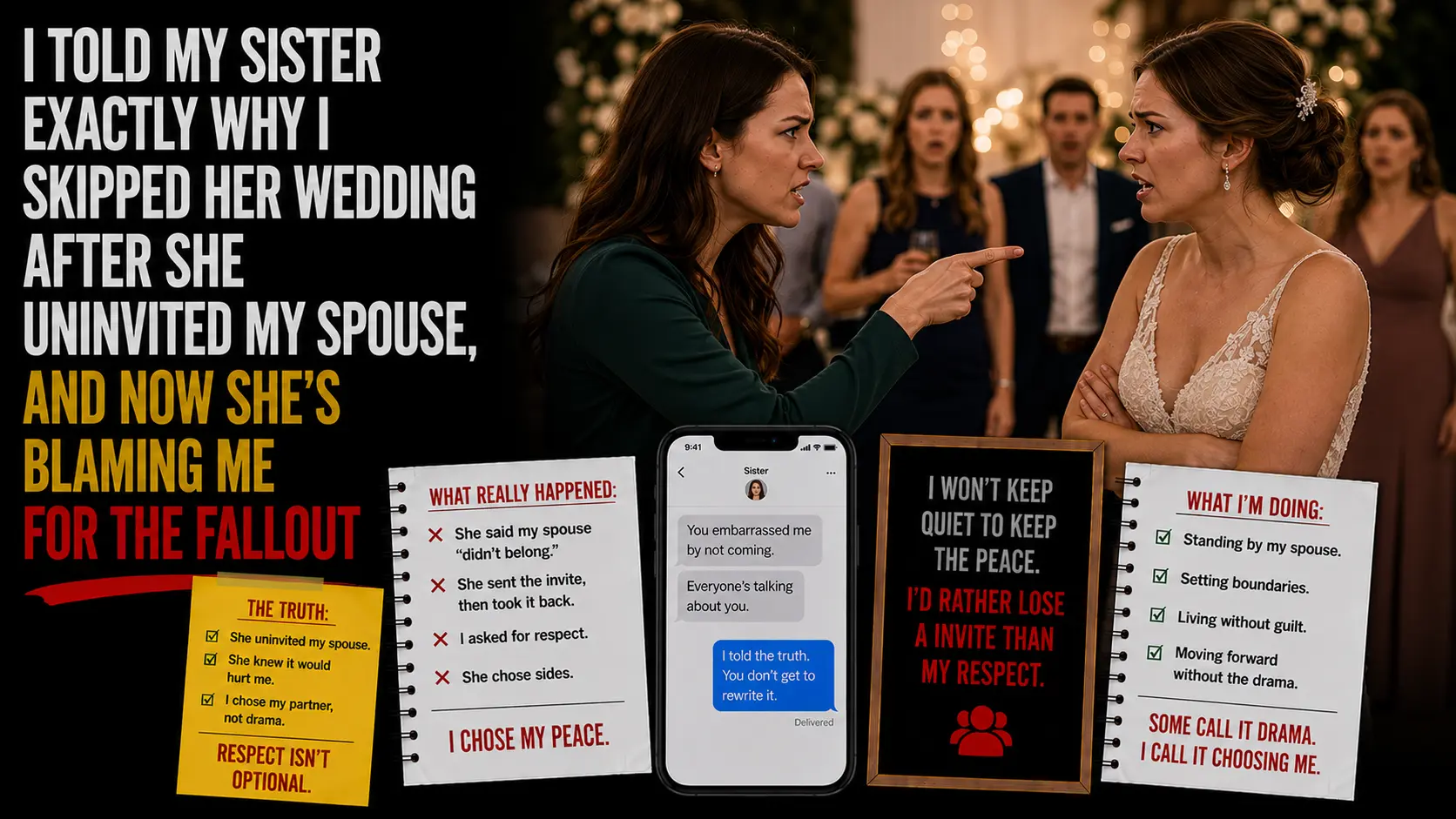
My sister and I had always been incredibly close. We grew up sharing everything, defended each other through childhood and adulthood, celebrated every milestone together, and promised nothing would ever come between us. So when she got engaged, I was genuinely excited to celebrate alongside her. My spouse and I gladly accepted the invitation, booked our hotel, bought a wedding gift, and even spent several weekends helping with decorations and preparations. It felt like a family event we were proud to support, which made the phone call a few weeks before the wedding completely unexpected. My sister nervously explained she needed to make a change to the guest list. I assumed she meant seating arrangements or last-minute logistics. Instead, she calmly told me my spouse was no longer invited because they didn’t fit the atmosphere she wanted for the wedding. I honestly thought she was joking until I realized she was completely serious.
I asked what had happened, but she insisted it wasn’t personal and expected me to attend alone simply because I was her sibling. Every conversation after that followed the same exhausting pattern. I explained why excluding my spouse was hurtful, and she dismissed my concerns by insisting it was only one day and accusing me of making the wedding about myself. Soon other relatives joined the conversation. My parents begged me to keep the peace, cousins reminded me that wedding planning is stressful, and even a few close friends suggested my spouse would probably understand. Looking back, I realize I kept searching for a compromise because I wanted to believe she would eventually reconsider. Instead, every attempt ended exactly the same way. I explained my position, she rejected it, and nothing changed. Eventually I realized she wasn’t simply asking me to attend a wedding—she was asking me to celebrate her marriage while treating my own as though it mattered less.
When the wedding day arrived, I stayed home with my spouse instead of attending the ceremony alone. We spent the day together with our phones turned off, knowing messages were probably piling up but choosing peace over another argument. That evening my sister finally called, furious that I hadn’t shown up. She demanded to know how I could do something like that to her on such an important day. After letting her finish, I calmly explained that she hadn’t simply uninvited my spouse—she had asked me to celebrate her marriage while acting as though mine was optional. The line went completely silent. Rather than argue any further, I forwarded screenshots of every conversation we’d had leading up to the wedding. They showed that I had clearly explained weeks earlier that if my spouse wasn’t welcome, I wouldn’t attend either. There had been no threats, no dramatic demands, just a simple boundary that she had chosen to ignore.
Over the following days, the rest of the family slowly began reading the complete conversation instead of relying on the version they had originally been told. Some admitted they had assumed I skipped the wedding without offering any explanation, while others still insisted that family loyalty should have come before my marriage. The family quickly divided into two camps. Some believed I should have attended alone and dealt with the disagreement afterward, while others admitted they would never celebrate someone else’s marriage after their own spouse had been deliberately excluded. Throughout all of it, my spouse quietly blamed themselves for creating tension between me and my sister. I reminded them that they hadn’t created the situation at all. The decision to exclude them had been someone else’s, and my decision was simply a response to that choice.
Looking back, I sometimes wonder whether attending only the ceremony before quietly leaving would have prevented months of family conflict. Maybe it would have softened the immediate fallout. But I also keep coming back to the same realization: asking someone to honor your marriage while openly disrespecting theirs is a contradiction that can’t simply be ignored. Marriage is built on standing beside your partner, especially when doing so is uncomfortable. In the end, I wasn’t choosing my spouse over my sister. I was choosing to honor the commitment I had already made. Sometimes protecting a marriage means disappointing people you love, and while I wish it hadn’t come to that, I don’t regret refusing to celebrate one marriage at the expense of another.

Hi, I’m Afzal — the person behind Story Spark. I’ve always been fascinated by real-life family and relationship dramas: the messy conflicts, the tough choices, and the question of who was really in the wrong. I started this blog in 2026 to collect and share these stories, along with my own take on each one. When I’m not writing here, I’m a stories writer.