
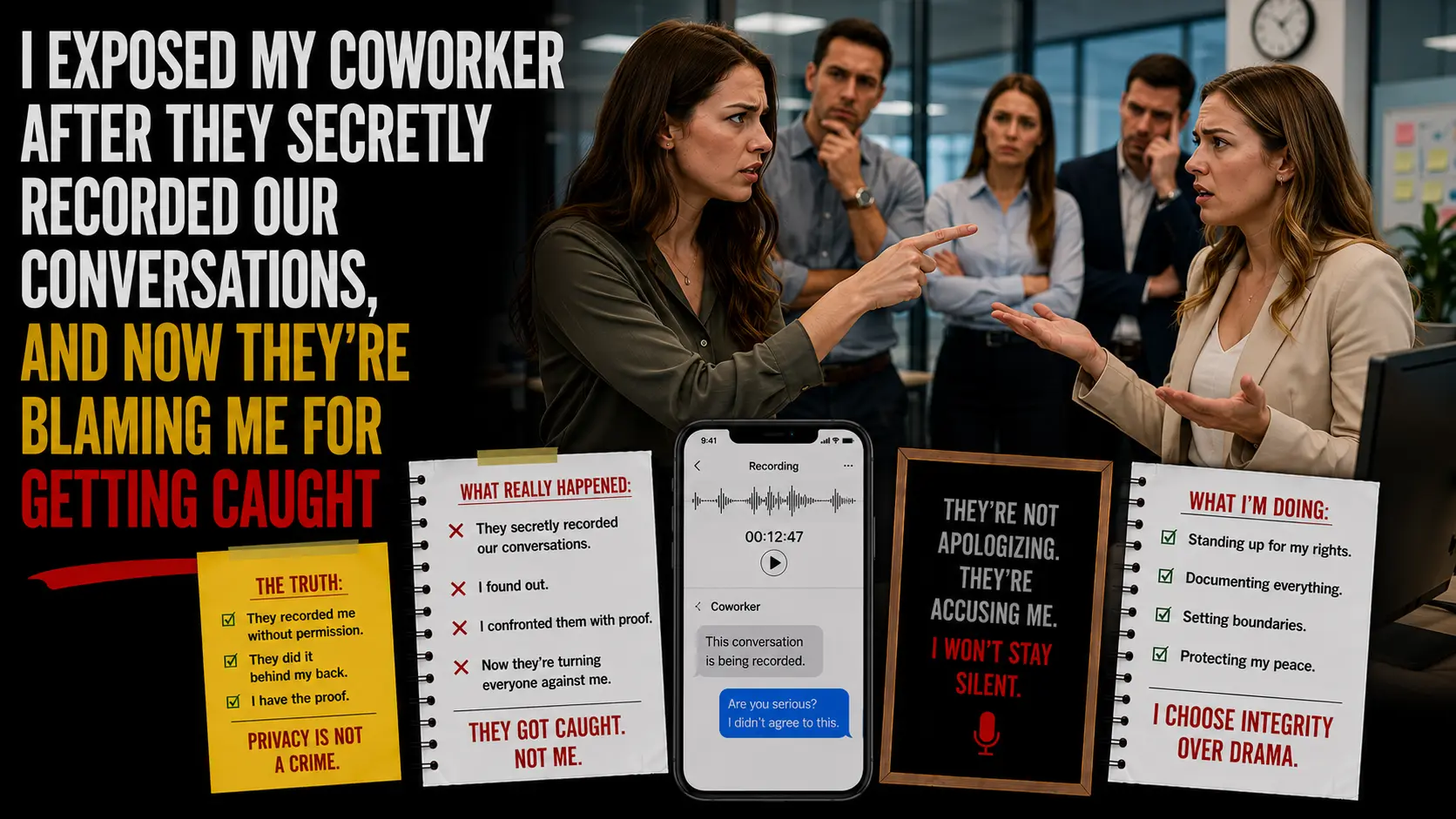
My coworker and I had worked together for nearly three years, and while we were never especially close outside the office, we had built the kind of friendship that naturally develops between people sharing long deadlines, difficult clients, and stressful workdays. We often grabbed coffee together, vented after exhausting meetings, and joked about surviving another week at the office. I never thought twice about speaking honestly because I believed those conversations stayed between the two of us. That trust began to crack when another colleague casually repeated something I had only ever said to my coworker. At first I dismissed it as a coincidence, but the same thing happened again and again. Private conversations started resurfacing around the office almost word for word, and every time I questioned how that could happen, my coworker laughed it off, insisting I was imagining things and becoming paranoid.
Instead of trusting my instincts, I convinced myself I was overthinking the situation. Looking back, that was probably my biggest mistake. I even felt guilty for silently suspecting someone I considered trustworthy. Still, I couldn’t ignore the strange behavior that kept repeating. Whenever we talked, my coworker always placed their phone face-up on the desk and became unusually protective of it if anyone reached toward it. More importantly, every week another private conversation somehow found its way to people who had no reason to know about it. The turning point came during a department meeting when a teammate casually quoted something I had said about a difficult client—a conversation that had taken place with only my coworker present. At that moment I stopped believing I was dealing with ordinary office gossip and realized something much more serious was happening.
Rather than confronting my coworker publicly, I chose to document everything. I kept track of dates, conversations, the coworkers who repeated private comments, and the unusual behavior I had noticed surrounding the phone. Once I had organized everything, I followed the company’s internal reporting process and submitted my concerns without making public accusations. A week later, Human Resources began interviewing employees individually. Their investigation eventually uncovered multiple recordings of workplace conversations that had been made without the knowledge or consent of the people involved. Company policy was clear, and when confronted with the evidence, my coworker admitted they had secretly recorded those conversations. Then they turned to me and accused me of destroying their career. I calmly replied that they had destroyed it themselves by recording people who trusted them, while I had simply refused to protect that behavior.
News spread quickly throughout the office. Several coworkers thanked me after learning they had also been recorded without their knowledge, admitting they felt deeply violated by what had happened. Others believed I should have confronted my coworker privately before involving management, arguing that everyone deserves another chance. One colleague even suggested I had overreacted. I simply asked how many chances someone should receive after secretly recording conversations and allowing those recordings to become office gossip. No one answered. My coworker defended their actions by saying the recordings were only meant to protect themselves if conflicts ever arose, but that explanation didn’t erase the fact that no one had consented or expected to be recorded in the first place.
Looking back, I sometimes wonder whether confronting my coworker one final time before reporting the situation would have changed anything. Perhaps some people would see that as the more loyal choice. But loyalty doesn’t require staying silent when someone repeatedly violates your trust and the trust of everyone around them. I never tried to embarrass them or spread rumors. I simply reported what I had observed and allowed the company’s investigation to determine the truth. In the end, the investigation confirmed exactly what had happened. Trust had already been broken long before I spoke up, and protecting that betrayal would not have been loyalty—it would have been enabling it.

Hi, I’m Afzal — the person behind Story Spark. I’ve always been fascinated by real-life family and relationship dramas: the messy conflicts, the tough choices, and the question of who was really in the wrong. I started this blog in 2026 to collect and share these stories, along with my own take on each one. When I’m not writing here, I’m a stories writer.