
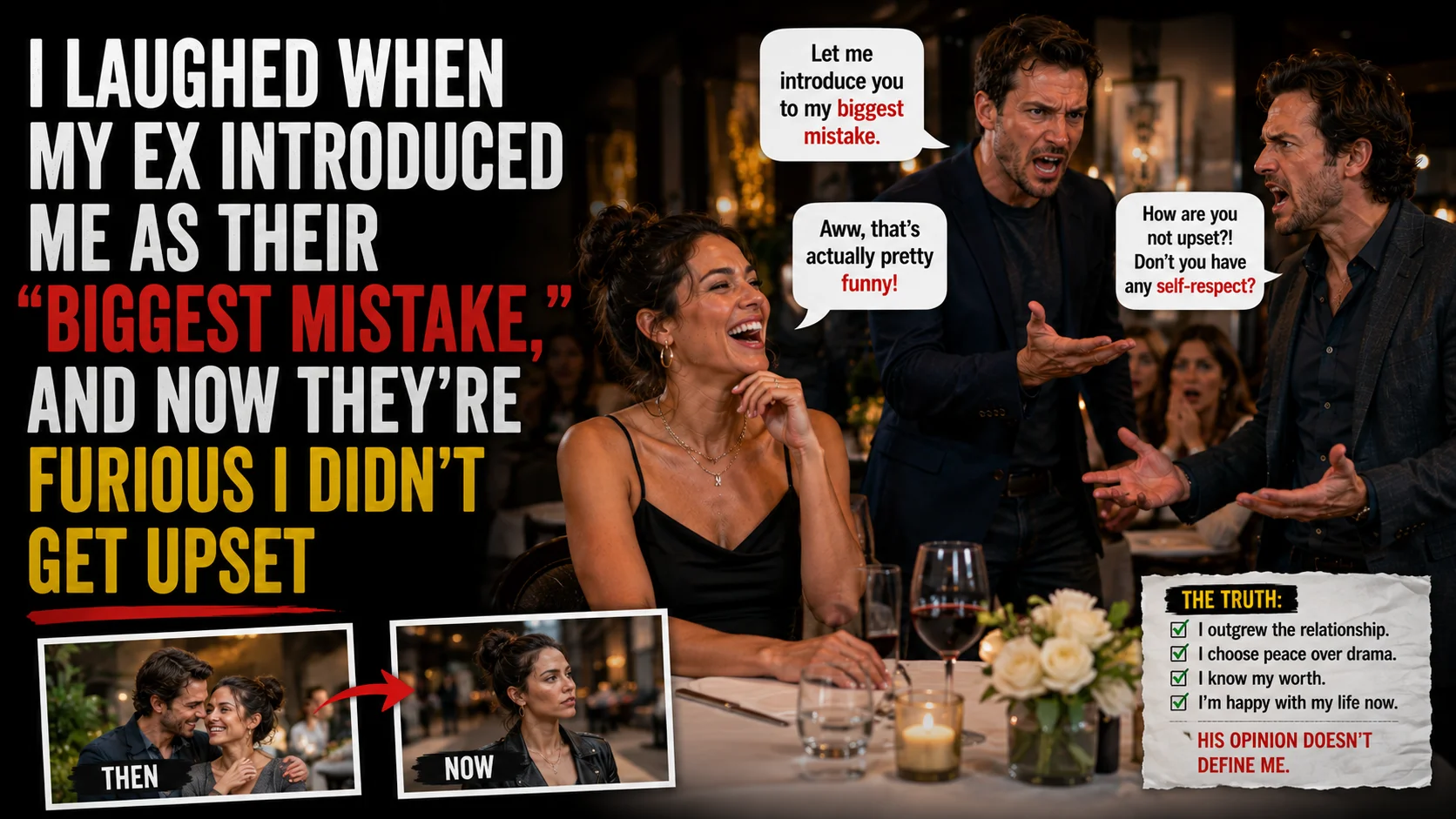
My ex and I had been together for nearly three years before we realized we wanted different things in life. Our breakup was difficult but respectful, with no betrayal or dramatic fight. Over the following year, I focused on rebuilding my life by changing careers, taking up new hobbies, and reconnecting with friends. Eventually, the relationship became a meaningful chapter in my past rather than something that continued to hurt me. When a mutual friend invited me to her birthday party, I knew my ex might be there, but I believed we were both mature enough to handle the situation.
At the party, everything seemed perfectly normal until someone asked my ex how we knew each other. Without hesitation, they introduced me as “the biggest mistake of my life.” The group laughed awkwardly, and everyone turned to see how I would react. Instead of feeling embarrassed or angry, I found the comment surprisingly childish and couldn’t help but laugh. When my ex asked what I found so amusing, I calmly replied that we were both lucky to have discovered we weren’t right for each other before getting married, giving us each the chance to find partners who were a better match.
My response completely changed the mood of the conversation. Rather than arguing or trading insults, I explained that I didn’t consider our three years together a waste because they taught us valuable lessons about what we wanted in life. While the strangers appreciated the mature perspective, my ex continued trying to frame the relationship as a failure, making it increasingly clear that they were the only person still emotionally invested in the conflict. Eventually, the conversation moved on, and the rest of the evening continued peacefully.
Later that night, my ex asked to speak with me privately and accused me of making them look immature. I explained that I had simply answered honestly and refused to react the way they expected. During our conversation, they quietly asked whether I truly didn’t care anymore, and I realized that their comments had been less about entertaining others and more about seeing whether they still had emotional control over me. I told them I appreciated the good memories we had shared but had genuinely moved on with my life.
After the party, several friends told me they had expected a dramatic confrontation but were impressed by how calmly the situation ended. The experience taught me that moving on doesn’t mean forgetting someone—it means no longer allowing them to control your emotions or your self-worth. Looking back, I wish the awkward introduction had never happened, but it also gave me something valuable: proof that I had finally found peace. Sometimes the strongest response isn’t winning an argument; it’s realizing the other person’s words no longer have the power to hurt you.

Hi, I’m Afzal — the person behind Story Spark. I’ve always been fascinated by real-life family and relationship dramas: the messy conflicts, the tough choices, and the question of who was really in the wrong. I started this blog in 2026 to collect and share these stories, along with my own take on each one. When I’m not writing here, I’m a stories writer.