
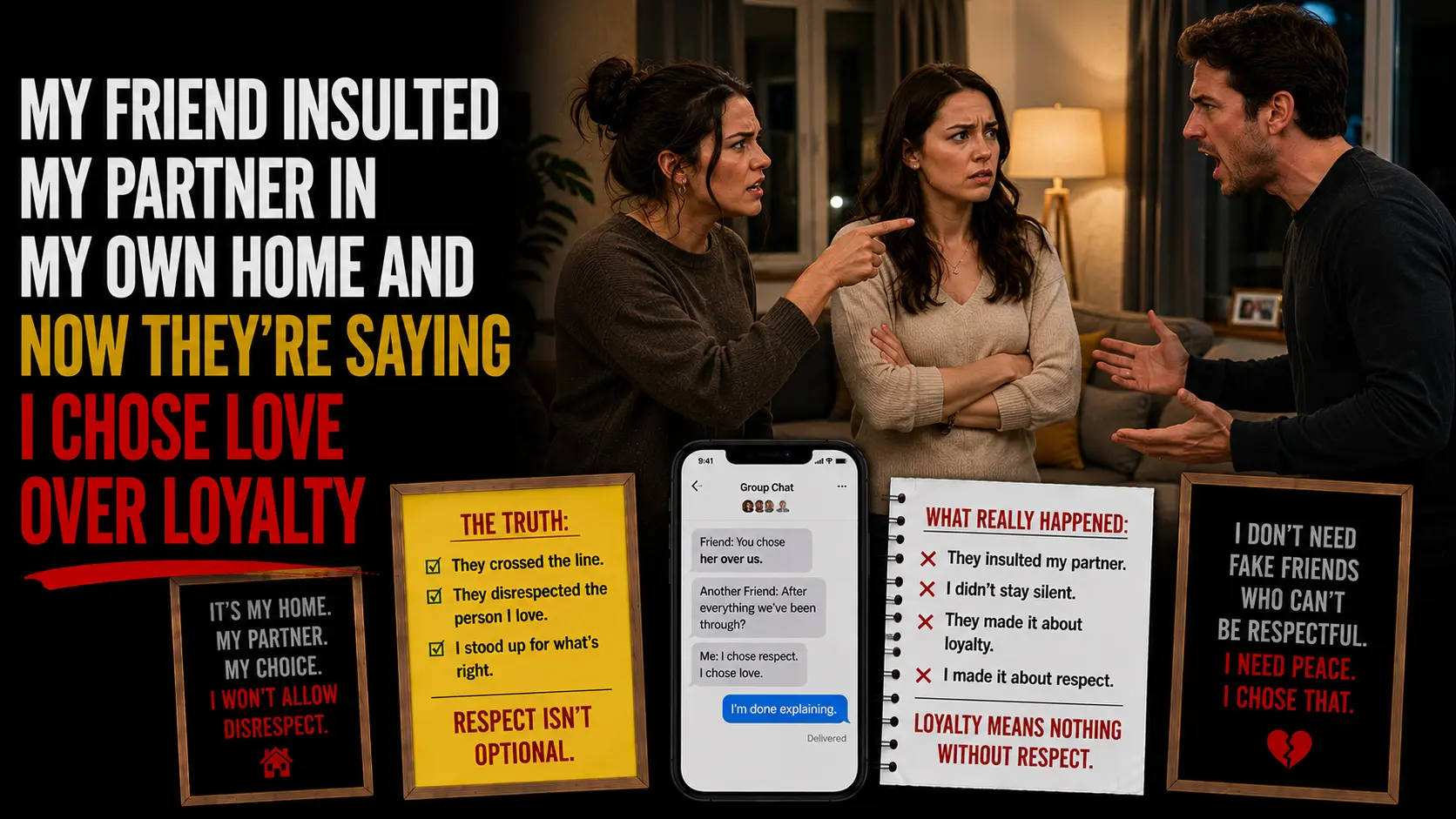
My friend and I had been inseparable for more than ten years. We’d supported each other through breakups, career setbacks, family problems, and nearly every major milestone of adulthood. I honestly considered them family, so when I started dating my partner, I hoped the two most important people in my life would eventually get along. Instead, my friend immediately became critical. At first the comments sounded like harmless jokes, but they never stopped. Every gathering included another sarcastic remark about my partner being too quiet, too ambitious, too emotional, or simply “not the right fit” for me. Whenever I defended them, my friend laughed it off, insisting I had changed or that love had made me blind. I ignored the warning signs because I wanted to believe the tension would eventually disappear.
Unfortunately, it only got worse. Mutual friends kept telling me that was just my friend’s personality and encouraged me not to make a big deal out of it. Looking back, I realize I made the same mistake by avoiding the conversation instead of setting boundaries early. Hoping to finally move past the awkwardness, I invited everyone to my house for dinner, convinced that spending time together in a relaxed environment would help everyone get along. Instead, the evening became the breaking point. During dinner, my partner mentioned receiving a promotion at work. Before anyone could congratulate them, my friend smirked and said, “Let’s see how long that lasts,” before adding, “You’re good at pretending to have everything together.” The room instantly fell silent as my partner quietly looked down at their plate while everyone waited to see how I would respond.
In that moment, I realized that staying silent wasn’t being neutral anymore. If I laughed it off again, I was helping humiliate someone I claimed to love inside our own home. I stood up, took a deep breath, and calmly said, “I think it’s time for you to leave.” My friend looked shocked and asked if I was serious. I simply replied that they didn’t have to like my partner, but they weren’t going to insult them in my house. They grabbed their jacket, accused me of choosing my partner over a friendship that had lasted ten years, and slammed the door behind them. I answered with the only thing that felt true: I wasn’t choosing one relationship over another—I was choosing respect over disrespect.
The fallout came almost immediately. My phone filled with messages from mutual friends. Some insisted I had embarrassed my friend over what they called a harmless joke, while others admitted they’d been uncomfortable with the comments for months and wondered why I hadn’t said something sooner. What hurt most was hearing my partner apologize that night, quietly saying they were sorry for causing the argument. I reassured them that none of it was their fault. The problem wasn’t the promotion or anything they had done. The problem was that I’d finally stopped pretending repeated disrespect was acceptable simply because it came from someone I’d known for years.
Over the following weeks, my former friend continued telling people I had abandoned a decade-long friendship for a relationship. Some believed that version without asking questions, while others eventually heard the full story and realized the insults had been happening for much longer than one dinner. Looking back, I sometimes wonder whether I should have asked my friend to step outside instead of ending the evening in front of everyone. Maybe that would have made things less dramatic. But public disrespect happened in front of everyone, inside my own home, and perhaps the boundary needed to be just as visible. In the end, I didn’t end a friendship over one joke. I ended it because years of disrespect finally reached the point where staying silent would have meant betraying the person I had promised to stand beside.

Hi, I’m Afzal — the person behind Story Spark. I’ve always been fascinated by real-life family and relationship dramas: the messy conflicts, the tough choices, and the question of who was really in the wrong. I started this blog in 2026 to collect and share these stories, along with my own take on each one. When I’m not writing here, I’m a stories writer.