
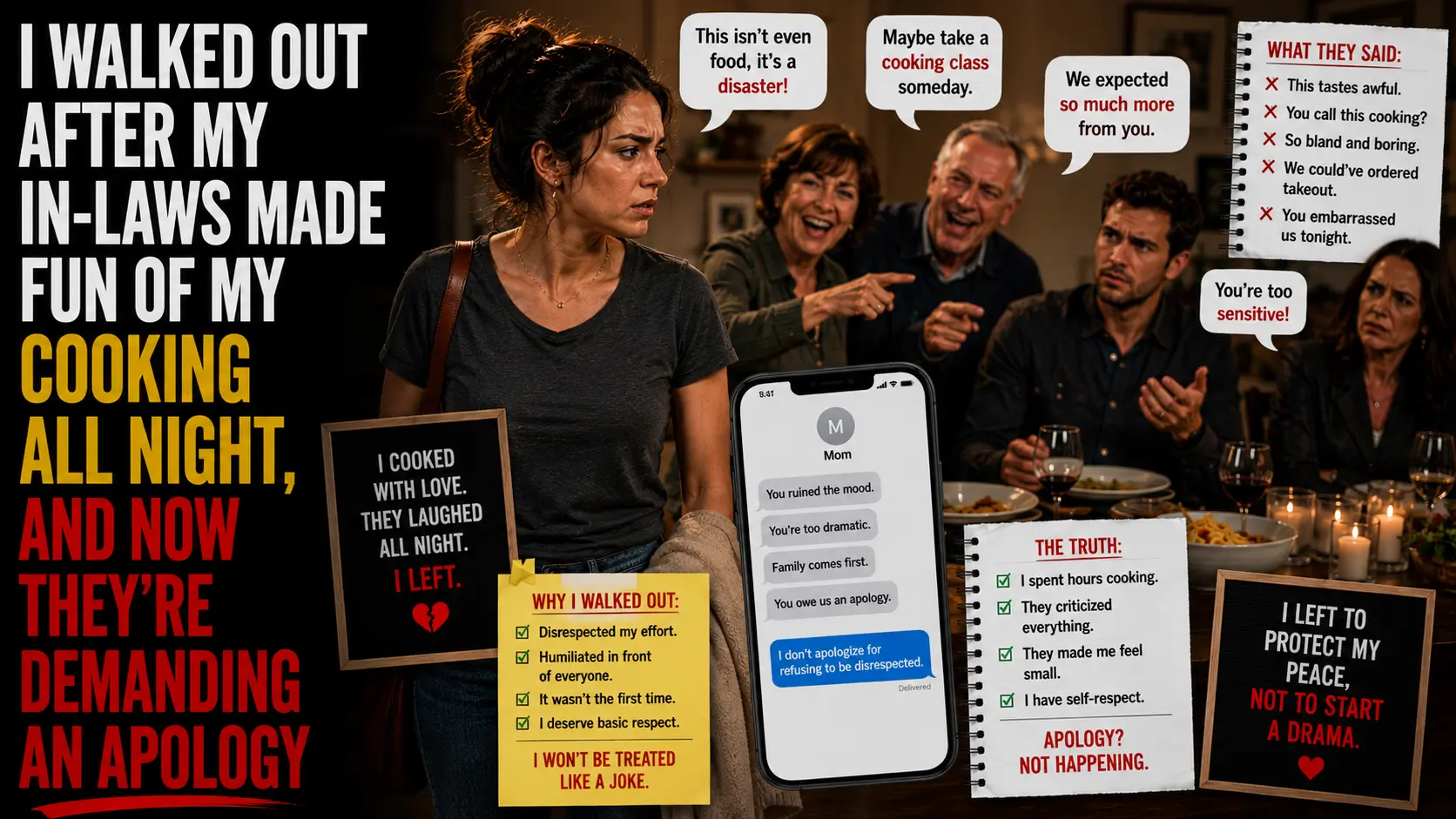
Cooking has always been my favorite way of showing people I care, so when my in-laws suggested having dinner at our house, I put my heart into preparing the meal. I spent nearly two days planning the menu, baking homemade bread, marinating chicken, roasting vegetables, and perfecting a dessert I had practiced more than once. My spouse loved everything I made and was confident the family would enjoy it. When everyone arrived, the evening began warmly with conversation, laughter, and family stories, making me believe all the effort had been worthwhile.
That changed as soon as dinner was served. My mother-in-law described the meal as “edible,” my father-in-law joked about the chicken being overworked, and my sister-in-law criticized the potatoes. Throughout the meal, every compliment someone offered was immediately followed by another sarcastic remark about my cooking. At first, I tried to laugh along, believing it was harmless teasing, but I soon realized every joke was directed at me. Even when one cousin sincerely complimented the food, my mother-in-law dismissed the praise by saying they were only being polite. My spouse repeatedly tried to change the subject, but the conversation always returned to criticizing the meal I had spent days preparing.
The final straw came during dessert when my mother-in-law joked that next year they should just order takeout instead. The entire table burst into laughter while only a few relatives looked uncomfortable but remained silent. At that moment, I realized I was no longer sharing a meal with family—I had become the evening’s entertainment. Without raising my voice or arguing, I stood up, calmly said I was done serving people who treated disrespect as entertainment, and quietly left the house. The following day, several relatives accused me of embarrassing everyone and ruining the dinner, but I responded with a single message explaining that if the food had truly been so terrible, they shouldn’t expect the person who cooked it to sit through hours of ridicule.
Soon afterward, my spouse apologized for not stopping the comments sooner, and one cousin admitted they had laughed only because everyone else had. As more family members reflected on the evening, the conversation shifted away from my decision to leave and toward why nobody had spoken up while the jokes continued. About a week later, my in-laws asked to meet, and during our conversation my mother-in-law admitted she had believed everyone was simply teasing. When I asked how she would have felt if every joke had been about something she had spent two days creating, she finally understood why I had been hurt and offered a sincere apology.
Family dinners gradually improved after that. The teasing became more balanced, no one person was singled out, and everyone showed greater appreciation for the effort that went into hosting. Looking back, I wish I had spoken up before the situation escalated, but the experience taught me an important lesson: generosity should never require accepting humiliation. Cooking for people is an act of love, and while criticism can be constructive, repeated public ridicule is not. Setting that boundary ultimately brought something to future family gatherings that had been missing all along—mutual respect.

Hi, I’m Afzal — the person behind Story Spark. I’ve always been fascinated by real-life family and relationship dramas: the messy conflicts, the tough choices, and the question of who was really in the wrong. I started this blog in 2026 to collect and share these stories, along with my own take on each one. When I’m not writing here, I’m a stories writer.