
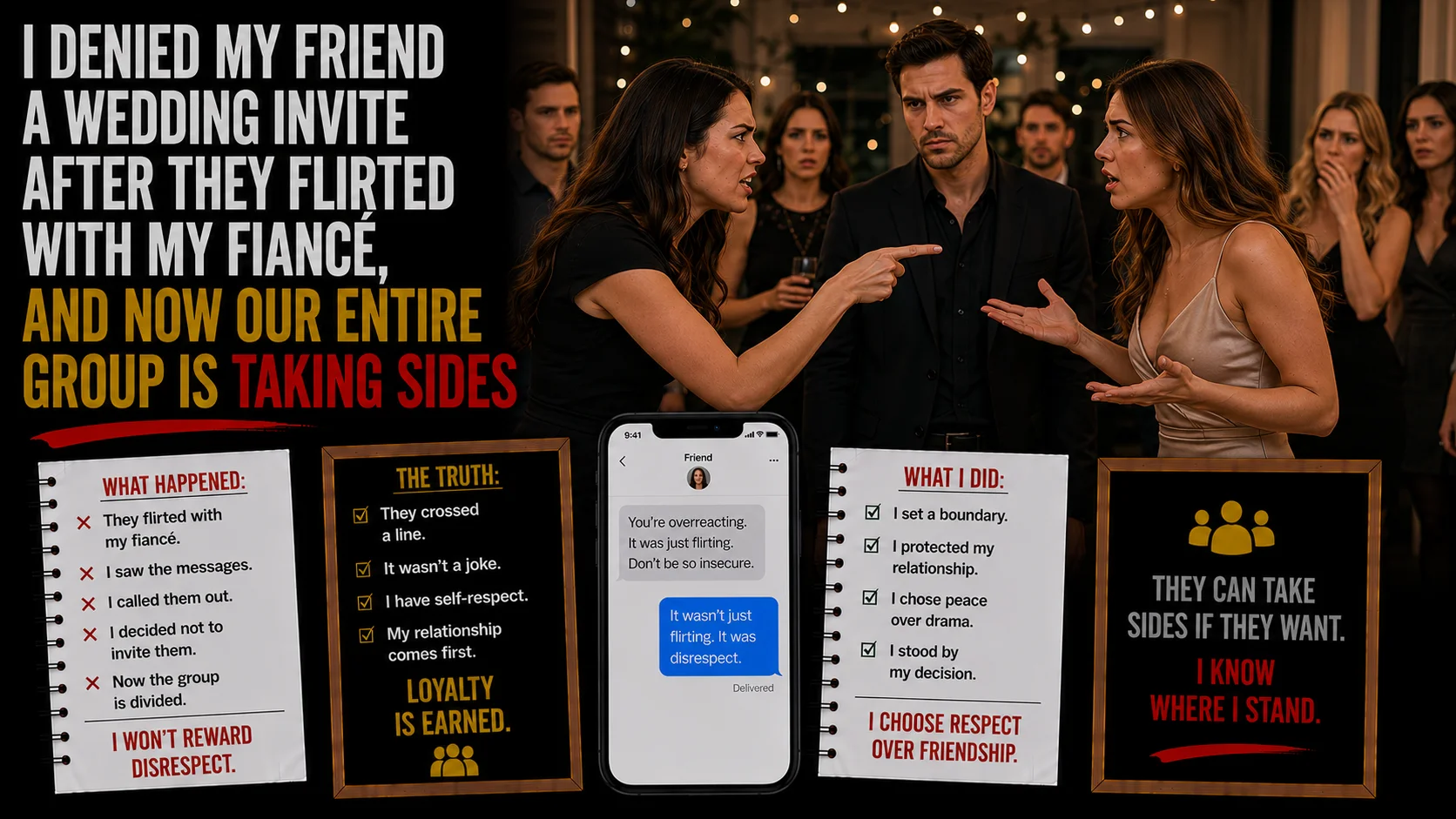
My best friend and I had been inseparable for nearly twelve years. We survived high school together, celebrated birthdays, supported each other through breakups, career changes, and family problems, and I genuinely believed they’d be standing beside me on my wedding day. When I introduced them to my fiancé, everything seemed perfectly normal. They laughed together, got along well, and our group outings felt effortless. I never questioned their friendship until the compliments slowly became more personal. Comments like, “You clean up really well,” or, “If I’d met you first, things might’ve turned out differently,” were always brushed off as jokes. Everyone laughed awkwardly, including me, and I convinced myself I was being overly sensitive. But over the following months, the pattern only became more obvious. My friend always managed to sit beside my fiancé, constantly touched their arm while laughing, complimented their appearance in front of everyone, and joked about how lucky I was. Even my fiancé eventually admitted the comments were making them uncomfortable.
I decided to address it privately before letting resentment build. I calmly explained that while I understood they probably meant it as humor, the constant flirting and comments were crossing a line. Instead of listening, they laughed in my face. They accused me of being jealous, insecure, and unable to take a joke. Wanting to preserve a friendship that had lasted more than a decade, I let the conversation go, hoping the behavior would naturally stop. Unfortunately, it only became worse. Our mutual friends noticed it too, but most dismissed it by saying that flirting was simply part of my friend’s personality and that they never actually meant anything by it. I wanted to believe that explanation because the alternative meant accepting that someone I’d trusted for years simply didn’t respect my relationship.
Everything came to a head during our engagement party. Friends and family gathered to celebrate, and after my fiancé gave a heartfelt speech, someone complimented them on how well they had spoken. My friend immediately smiled and loudly announced, “Well… they settled way too quickly if you ask me.” The room instantly fell silent. My fiancé calmly replied that they didn’t think the comment was funny. Rather than apologizing, my friend laughed even harder and insisted everyone should relax because it was just another joke. Looking around the room, I noticed something important. No one else was laughing anymore. That was the moment I finally accepted that this wasn’t one awkward comment—it was months of disrespect hidden behind humor, despite repeated requests to stop.
When we finalized our wedding guest list the following week, I paused when I reached my friend’s name. After thinking about everything that had happened, I removed it. A few days later they called after realizing they hadn’t received an invitation. I explained honestly that I wasn’t comfortable inviting someone who repeatedly disrespected my relationship. They accused me of ending a twelve-year friendship over a few jokes. I calmly corrected them. I wasn’t ending the friendship because of one joke. I was responding to months of ignored conversations where I’d explained how their behavior affected both me and my fiancé, only to be told my feelings didn’t matter. The call ended badly, and within hours our entire friend group had heard different versions of the story. Some friends admitted they’d noticed the flirting all along but hadn’t wanted to get involved. Others insisted I was overreacting and throwing away a friendship over someone’s inappropriate sense of humor.
My fiancé never questioned my decision for a second. They told me they would rather have a smaller wedding filled with people who respected our relationship than a larger celebration overshadowed by unnecessary tension. Hearing that reassured me I’d made the right choice. The invitations are finalized now, and the wedding is only weeks away. My former friend still believes I chose my relationship over loyalty. In many ways, I suppose I did. But I also believe genuine loyalty includes respecting the boundaries of someone else’s relationship instead of constantly testing them for entertainment. Looking back, I sometimes wonder whether inviting them would have avoided the division within our friend group. Then I remember every conversation where my concerns were dismissed as insecurity and every opportunity they had to stop but deliberately chose not to. A wedding celebrates love, commitment, and respect. Someone who repeatedly undermined those values shouldn’t expect a seat at the celebration simply because they’d been part of my past.

Hi, I’m Afzal — the person behind Story Spark. I’ve always been fascinated by real-life family and relationship dramas: the messy conflicts, the tough choices, and the question of who was really in the wrong. I started this blog in 2026 to collect and share these stories, along with my own take on each one. When I’m not writing here, I’m a stories writer.