
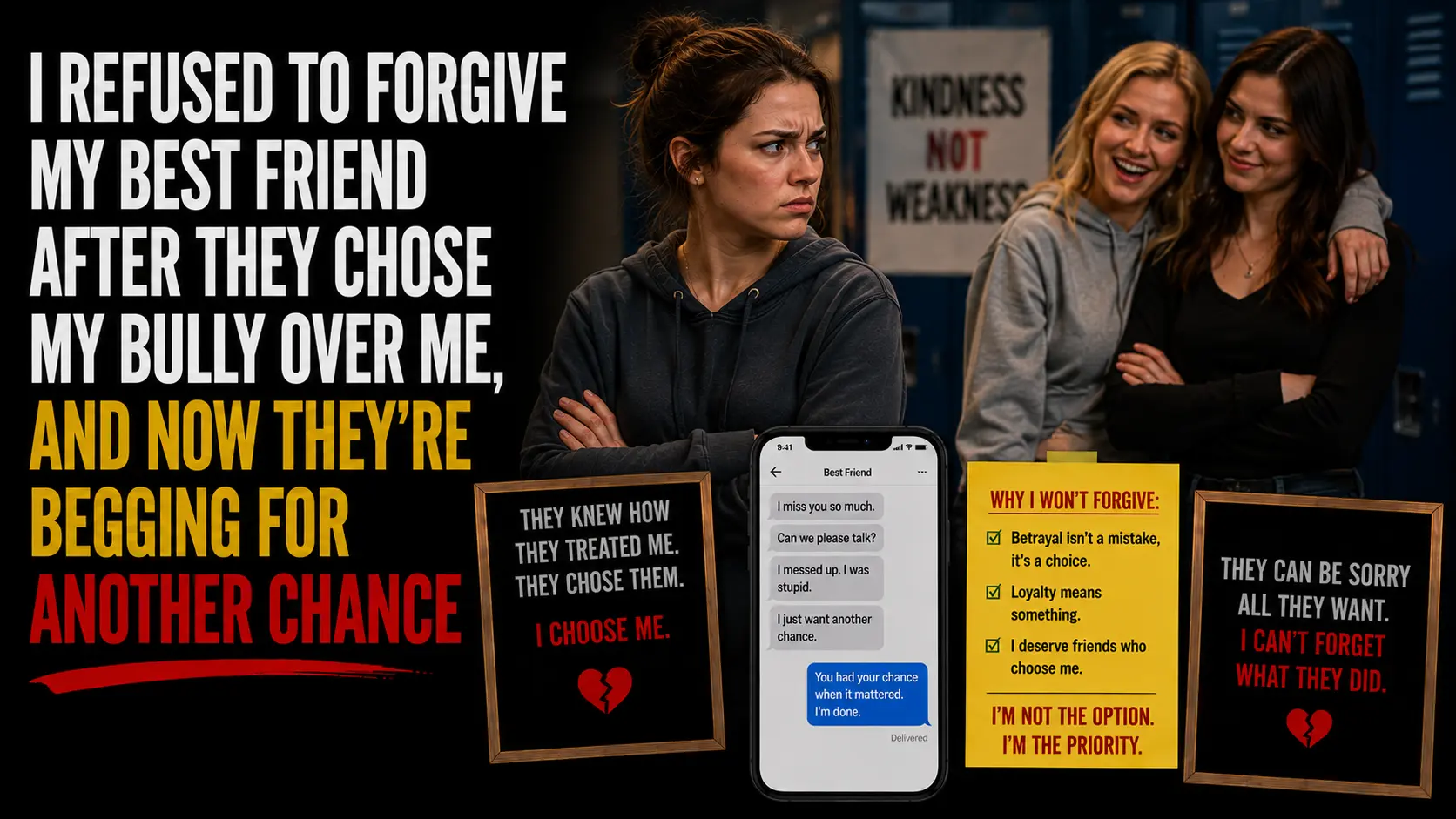
My best friend knew exactly what my school years had been like. They had seen me come home in tears, listened while I talked about the rumors, the humiliation, and the constant anxiety that came from being bullied. More than once, they promised they would always have my back. That promise stayed with me long after we graduated, which is why their betrayal hurt more than anything my former bully had ever done.
The bullying itself wasn’t physical. It was constant gossip, fake stories, whispered insults, and public embarrassment that slowly destroyed my confidence. Every morning I dreaded walking into school because I never knew what new rumor would be waiting for me. Some days I pretended to be sick just to avoid going. Other days I ate lunch alone because it felt safer than risking another round of humiliation. Through all of it, my best friend stood beside me, reminding me that none of it was my fault and assuring me that I would never have to face it alone.
Years later, life had finally settled down. We had careers, new routines, and adult lives. I barely thought about my former bully anymore until one evening my best friend casually mentioned they had started spending time with them. At first I thought they were joking, but they explained that their social circles had crossed paths and everyone insisted this person had changed. I didn’t tell my friend who they could or couldn’t spend time with. I simply explained that I wasn’t comfortable being around someone who had made my life miserable. They smiled and promised our friendship wouldn’t change.
For a while, I believed them. Then I started noticing group dinners I hadn’t been invited to, weekend photos online, and birthday celebrations where my former bully stood right beside my best friend. Eventually it became obvious they weren’t just casual acquaintances anymore—they had become genuinely close. I finally admitted how much it hurt to watch. My best friend sighed and told me I needed to let the past go. That sentence hit harder than they probably realized because healing isn’t something another person gets to schedule. I tried explaining that the memories and anxiety hadn’t disappeared simply because time had passed, but every conversation left me feeling like I had to defend my own pain.
Everything came to a head when I arrived at a mutual friend’s birthday party and found my former bully standing beside my best friend. No one had warned me they would be there. I quietly turned around and left before anyone noticed. Later that night my best friend texted asking why I had walked out. I answered honestly, saying they had knowingly invited me into a situation they understood would hurt me. Their response was simple: they thought I had moved on by now. That message stayed with me for days because it made it sound as though healing came with a deadline and surviving something painful meant pretending it no longer mattered.
After that, I stopped reaching out. I didn’t send angry messages or dramatic speeches. I simply allowed the friendship to fade into silence. Months later they called, saying they missed me and wanted to fix things. We met for coffee, and after they apologized for growing distant, I asked them one question: when they knew exactly what that person had put me through, why had protecting my feelings become less important than protecting their new friendship? They looked down for a long time before quietly admitting they had honestly believed enough time had passed. I told them that time passes automatically, but healing doesn’t. Neither of us had anything else to say.
A few weeks later something unexpected happened. During another gathering, my former bully stood up while everyone was laughing about old school memories. Suddenly they became serious and admitted that many of the rumors they had spread about me had been completely false. They apologized publicly in front of everyone. The room fell silent. For the first time, everyone heard the truth that I had carried by myself for years. My best friend looked completely devastated.
Afterward they found me outside and admitted they hadn’t understood the depth of what had happened. They thought it had been nothing more than ordinary school drama. I quietly explained that it hadn’t stayed in school—it had followed me long after graduation. They apologized again, this time without excuses or telling me I should be over it. For the first time, I believed they truly understood what they had dismissed.
We met one final time a few days later. They apologized sincerely and accepted responsibility for failing me when I needed them most. I thanked them and told them I forgave them. For a brief moment they looked relieved until I added that forgiveness wasn’t the same as rebuilding trust. I didn’t hate them, but I no longer felt emotionally safe in the friendship. They cried, and honestly, I almost did too. Losing someone who had once been your closest friend hurts, even when you know walking away is the healthiest decision.
Looking back, I wish things had turned out differently. I would rather have kept my best friend than learned such a painful lesson. But I also discovered that real friendship isn’t measured by who stands beside you when life is easy. It’s measured by who refuses to make you feel alone when your past still hurts. My former friend still believes everyone deserves another chance, and maybe they’re right. Second chances can be meaningful, but no one is entitled to reclaim the place they once held in your life after trust has been broken.
Sometimes forgiveness is possible without rebuilding what was lost. Sometimes protecting your peace means accepting that the person who once knew you best no longer belongs in the next chapter of your life. That doesn’t erase the good memories or the years we shared. It simply acknowledges that trust, once broken in the moments that mattered most, isn’t always something that can be repaired.

Hi, I’m Afzal — the person behind Story Spark. I’ve always been fascinated by real-life family and relationship dramas: the messy conflicts, the tough choices, and the question of who was really in the wrong. I started this blog in 2026 to collect and share these stories, along with my own take on each one. When I’m not writing here, I’m a stories writer.