
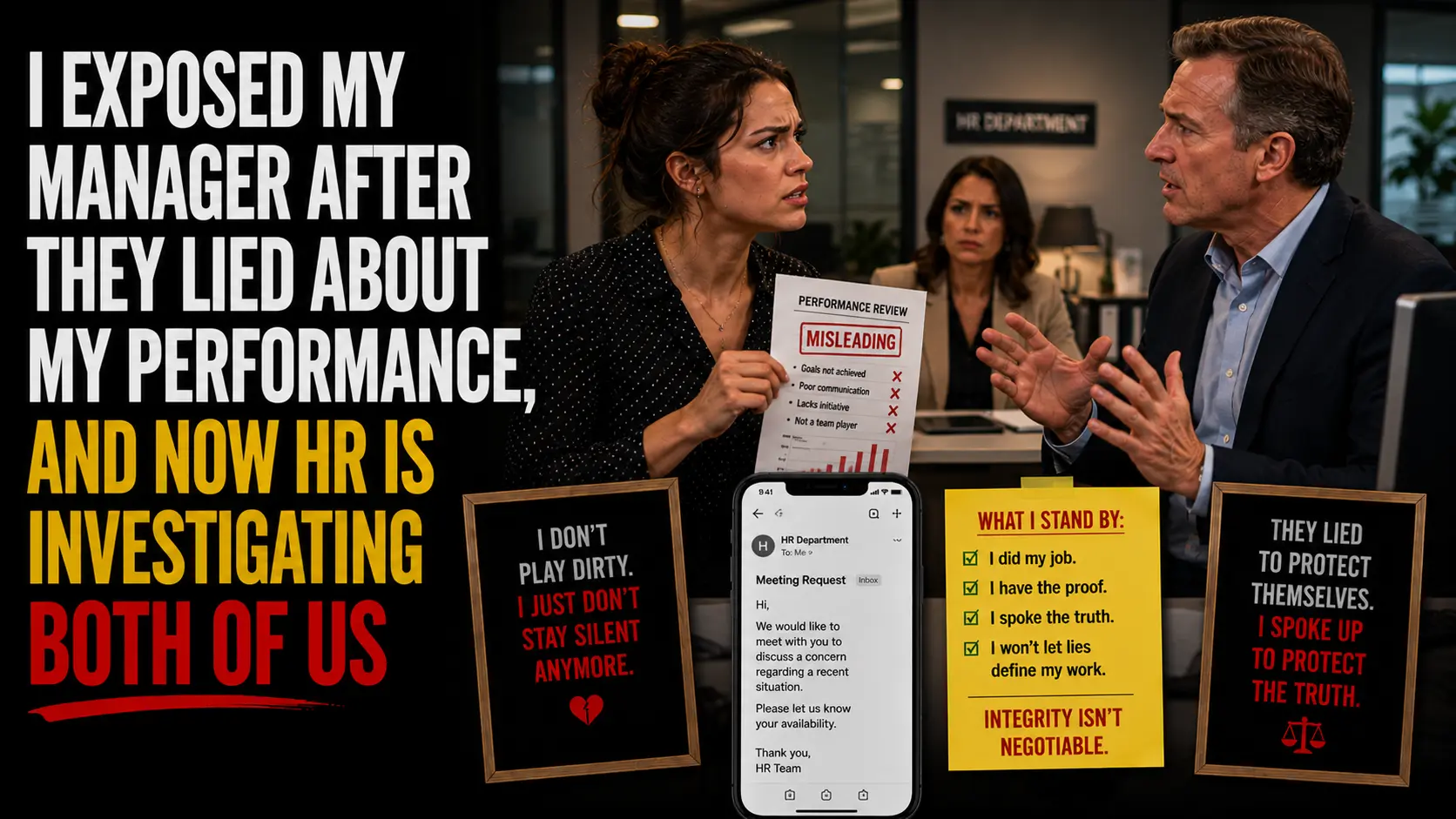
I walked into my annual performance review expecting an honest discussion about my work after nearly three years with the company. Throughout the year, I had consistently completed projects on time, maintained strong attendance, volunteered for challenging assignments, and received positive feedback from my manager during meetings and through email. However, when I read the written evaluation, I was shocked to find claims that I had repeatedly missed deadlines, failed to communicate with clients, and required constant supervision. None of the comments reflected the work I had actually done, and when I politely asked for specific examples, my manager gave only vague answers before insisting the review was final.
Rather than arguing, I returned to my desk and began comparing the evaluation with my own records. I had always kept organized documentation, including project timelines, client emails, meeting notes, and performance feedback. Within minutes, I found that the review directly contradicted documented evidence. Projects described as late had actually been completed ahead of schedule, clients who were supposedly dissatisfied had sent emails praising my communication, and assignments I was accused of needing supervision for had been entrusted to me specifically because of my independence. After reviewing every point carefully, it became clear that the written evaluation simply did not match the documented facts.
Because performance reviews affected promotions, raises, and future opportunities within the company, I decided to follow the official appeal process. I submitted a respectful request to Human Resources asking them to compare my evaluation with the supporting documentation I provided. During the HR meeting, I calmly presented project records, emails, client feedback, and status reports for every issue raised in the evaluation. I avoided personal accusations and focused only on verifiable facts. When HR compared my manager’s written comments with the documented evidence, they found multiple inconsistencies and asked my manager to explain the discrepancies, but no explanation matched the records.
Several weeks later, HR informed me that the original evaluation would be withdrawn and replaced after an independent manager reviewed my performance using objective evidence. The revised evaluation reflected my actual work, recognizing my consistent performance and highlighting areas where I had exceeded expectations. The company also introduced a new policy requiring documented evidence to support significant negative performance reviews before they became official, ensuring greater fairness for all employees. Several coworkers later thanked me because they had experienced confusing evaluations in the past but never realized they could request a formal review.
Looking back, I never wanted to challenge my manager personally or create conflict. My goal was simply to make sure my professional record accurately reflected the work I had done. The experience reinforced the importance of keeping thorough documentation, not because conflict is expected, but because facts provide protection when questions arise. Professional reputations take years to build, and a single inaccurate evaluation can have lasting consequences. By relying on evidence rather than emotion and following the company’s established process, I was able to protect both my reputation and help improve the review system for everyone.

Hi, I’m Afzal — the person behind Story Spark. I’ve always been fascinated by real-life family and relationship dramas: the messy conflicts, the tough choices, and the question of who was really in the wrong. I started this blog in 2026 to collect and share these stories, along with my own take on each one. When I’m not writing here, I’m a stories writer.