
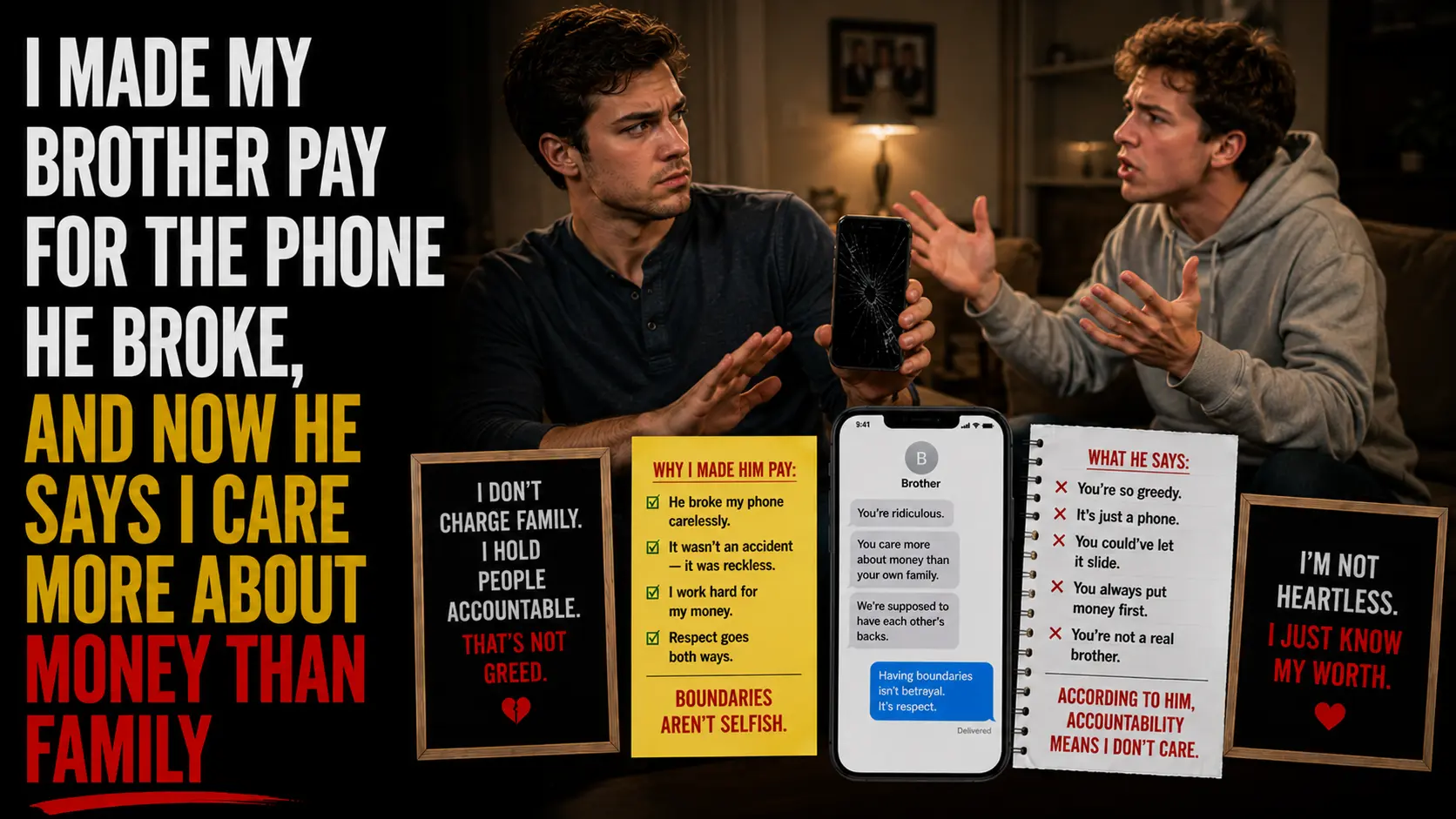
I have always believed that family should be able to trust one another, but growing up, my brother had a habit of avoiding responsibility whenever he damaged someone else’s belongings. If he broke or borrowed something, everyone was expected to forgive him because “family is more important.” After years of hearing that, I eventually stopped lending him expensive items. However, during a family barbecue, someone asked for a group photo, and I handed my brother my nearly new phone so he could take it. Instead of simply taking the picture, he started tossing the phone between his hands like a baseball despite my asking him to stop. Moments later, it slipped from his hand, hit the patio, and shattered on the concrete.
Although everyone agreed the damage was accidental, my brother immediately dismissed the situation by saying, “Phones break. These things happen.” I expected at least an apology or an offer to help replace the phone, but instead he insisted that accidents shouldn’t require him to pay for the damage. Several relatives sided with him, arguing that family was more important than arguing over a phone. I calmly pointed out that while it had indeed been an accident, accidents still have consequences. After getting the repair estimate and discovering the damage was extensive, I sent my brother the cost, but he refused, saying I couldn’t expect my own brother to pay for it.
Eventually, our parents invited both of us over to settle the disagreement. After listening to each side, my father asked my brother one simple question: if someone else had broken his phone the same way, what would he expect? Without thinking, my brother admitted he would expect that person to pay for the repairs. My father then asked why I should be expected to accept less simply because we were family. That question ended the argument because everyone realized the issue had never been about whether the accident was intentional—it was about taking responsibility afterward.
About a week later, my brother transferred enough money to cover the repair costs. A few days after that, he visited me and admitted that everyone, including himself, had grown used to me letting things go to keep the peace. He acknowledged that he would have been upset if the situation had been reversed and finally understood why I had asked him to pay. From that point on, something changed within our family. When people borrowed something, they returned it, and if something was damaged, they replaced it without arguments or guilt trips.
Looking back, I never cared more about the phone than I did about my brother. What mattered was establishing that being family does not excuse someone from taking responsibility for their actions. Respecting the people closest to you also means respecting their belongings and accepting accountability when you accidentally damage them. Asking my brother to pay for the repairs didn’t weaken our relationship—it ultimately made it healthier by replacing old expectations with mutual respect and responsibility.

Hi, I’m Afzal — the person behind Story Spark. I’ve always been fascinated by real-life family and relationship dramas: the messy conflicts, the tough choices, and the question of who was really in the wrong. I started this blog in 2026 to collect and share these stories, along with my own take on each one. When I’m not writing here, I’m a stories writer.