
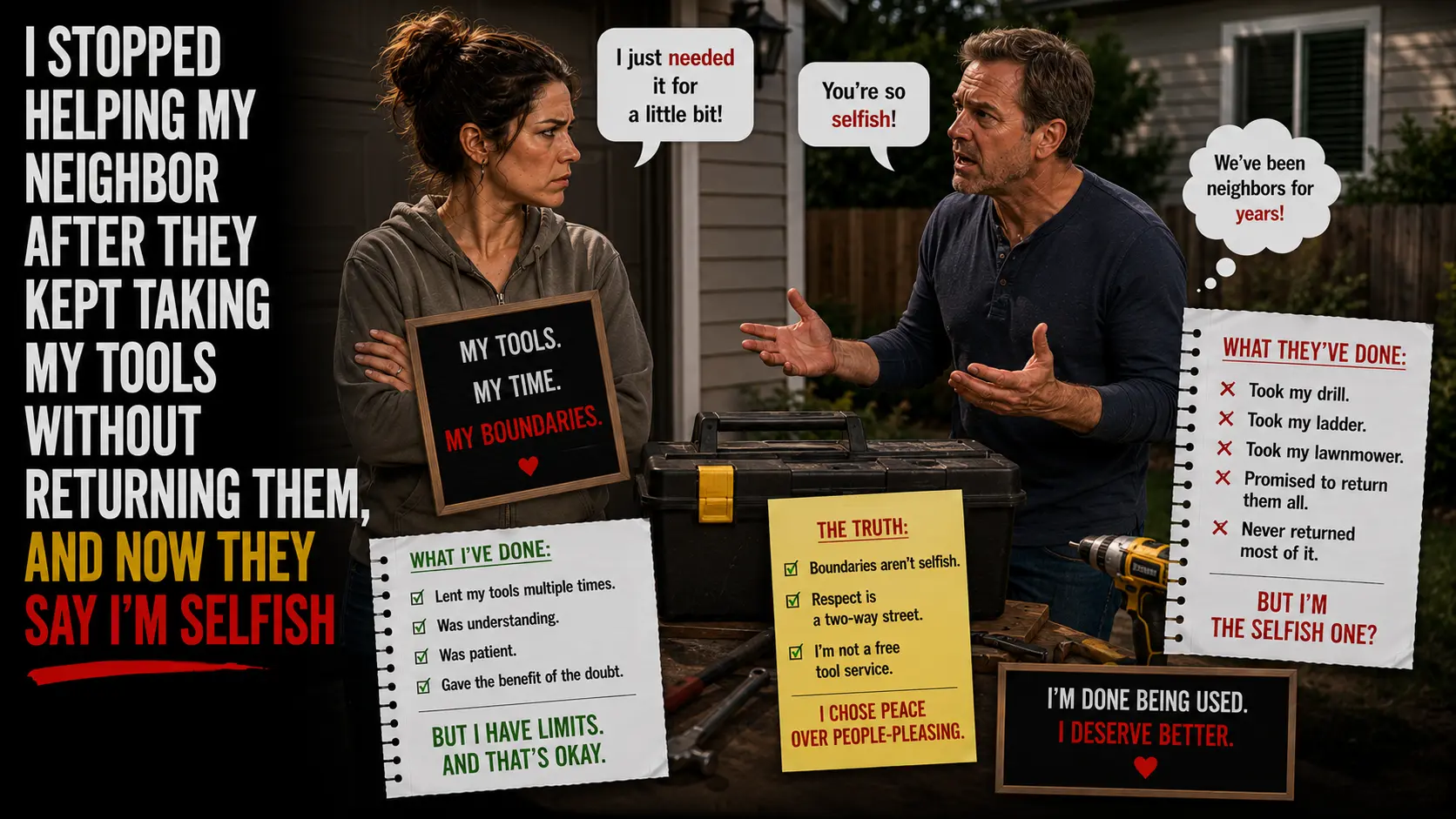
When I bought my first house, I wanted to be the kind of neighbor who was always willing to help. Whenever my neighbors needed a tool, whether it was a screwdriver, hammer, drill, ladder, or pressure washer, I happily lent it to them. At first, I didn’t mind because I believed neighbors should support each other. However, over time I noticed a pattern. My tools were rarely returned on time, and I often had to remind them multiple times before getting them back. Some items came back dirty, damaged, or missing parts, while others, like an extension cord, disappeared completely.
The situation gradually became more frustrating as my neighbors stopped treating my belongings like borrowed property. They would regularly knock on my door or call whenever they needed another tool, assuming I would always say yes. The breaking point came when I had planned an entire weekend to build shelves in my garage, only to realize my cordless drill was still at my neighbor’s house. After reminding them several times, they returned it with a dead battery, a cracked case, and a missing drill bit. That was the moment I realized I was spending more time recovering my own tools than actually using them.
The following weekend, when my neighbors asked to borrow my ladder, I politely explained that I was no longer lending out my tools because I was tired of constantly chasing people to return them. They were offended and insisted they always brought everything back, but I simply replied, “Eventually.” Soon afterward, word spread around the neighborhood that I had become selfish and unwilling to help anyone. However, during our annual neighborhood barbecue, several other neighbors admitted they had experienced the exact same problems with the same family, including missing equipment, delayed returns, and damaged tools.
Hearing everyone else’s experiences made my neighbors realize the issue wasn’t just between us. A few days later, they came to my door carrying a box containing my missing extension cord, drill bit, toolbox sockets, and even brand-new replacement parts. They also included a handwritten note apologizing for taking my generosity for granted and admitting they had begun treating my tools as though they belonged to everyone. Their sincere apology changed the situation completely, and from then on they always asked permission, agreed on return times, and made sure everything came back in good condition.
Looking back, I wish I had established clear boundaries much sooner instead of allowing my frustration to build over time. The experience taught me that being generous does not mean accepting disrespect for your property. Helping others is a wonderful thing, but kindness should never require constantly chasing people to return what already belongs to you. Since setting those boundaries, I still lend tools to neighbors, but only to people who respect both my generosity and my belongings.

Hi, I’m Afzal — the person behind Story Spark. I’ve always been fascinated by real-life family and relationship dramas: the messy conflicts, the tough choices, and the question of who was really in the wrong. I started this blog in 2026 to collect and share these stories, along with my own take on each one. When I’m not writing here, I’m a stories writer.