
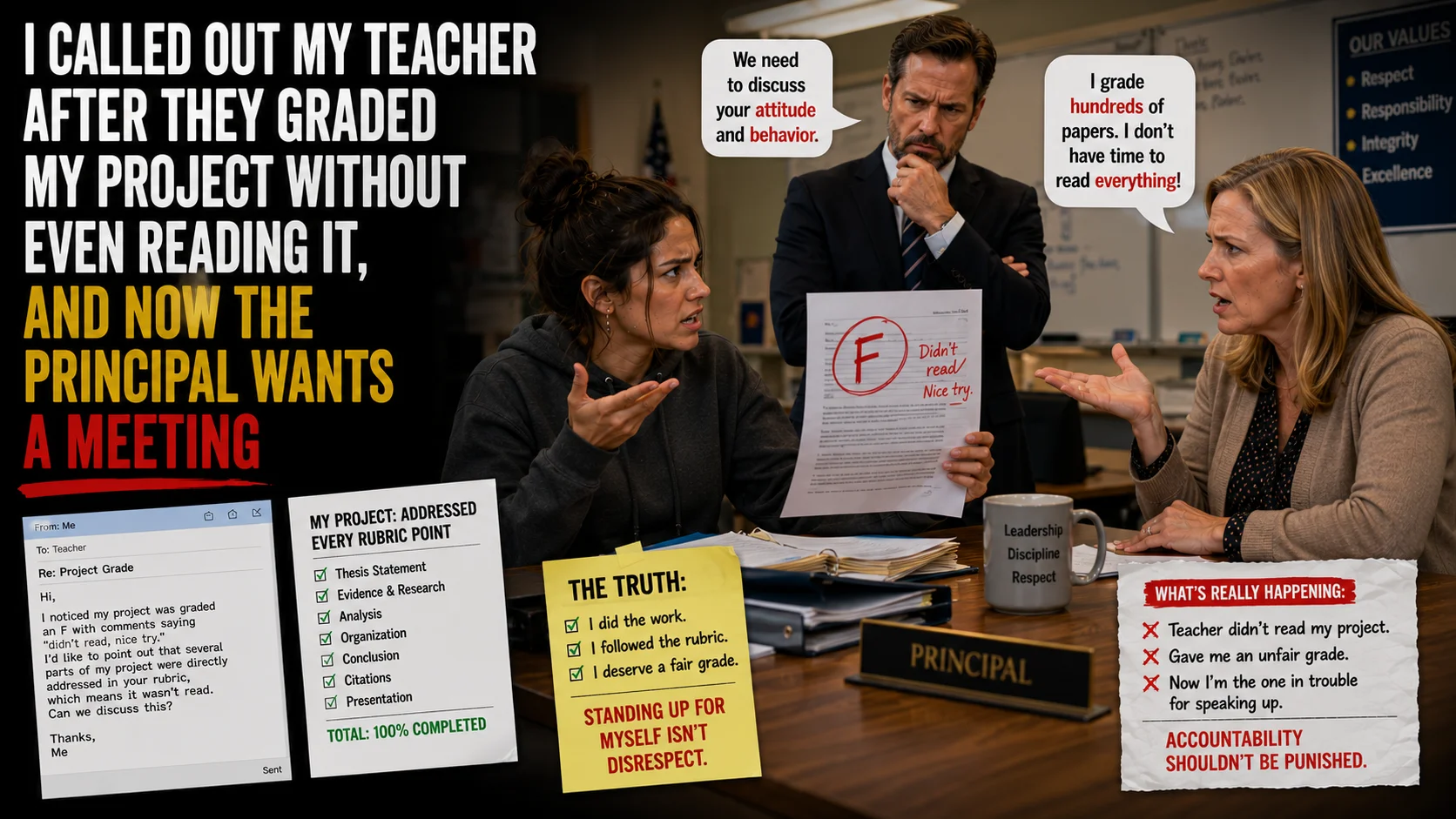
I spent three weeks researching, writing, and revising my final project, which was worth nearly forty percent of my final grade. I met with my teacher during office hours twice, confirmed that my topic was appropriate, and submitted the paper feeling proud of the work I had completed. When the graded project was returned, I was disappointed by the score but became even more concerned after reading the feedback. Several comments criticized sections that clearly existed in my paper, and one remark referred to an entirely different case study that had never appeared in my assignment.
Believing there had been a mistake, I politely emailed my teacher and requested a chance to review the feedback together. The response simply stated that the grade would not be changed. I carefully reread my project, compared it to the grading rubric, and highlighted every section that addressed the teacher’s comments. During a meeting after class, I calmly showed where I had discussed the long-term economic impact, included comparison charts, and explained that my paper focused on the Green Valley Housing Initiative—not the Rivergate Transit Project mentioned in the feedback. After reviewing my paper more carefully, my teacher admitted they might have confused my assignment with another student’s.
The following day, I was asked to meet with the principal, which initially made me nervous. Instead of arguing, I presented my project, the grading rubric, the teacher’s written comments, and the email correspondence. I explained each discrepancy respectfully and demonstrated how the feedback did not match my actual work. After reviewing the evidence, the principal agreed that the assignment deserved another evaluation and arranged for an independent teacher to grade the project.
A week later, my project was regraded, and my score increased by nearly twenty points. Shortly afterward, the school introduced a new policy allowing major assignments with documented grading discrepancies to receive an independent second review. Several classmates later admitted they had experienced confusing feedback before but never questioned it because they assumed the teacher must be right or feared being seen as argumentative. My teacher eventually apologized, explaining that they had been grading a large number of papers during a particularly stressful period.
Looking back, I am not most proud of the higher grade but of the way I handled the situation. I remained respectful, relied on facts instead of emotion, and simply asked that my feedback be compared with my actual paper. The experience taught me that respectfully questioning a decision is not disrespectful—it is an important part of ensuring fairness. By staying calm and presenting clear evidence, I not only corrected my own grade but also helped create a process that could benefit future students.

Hi, I’m Afzal — the person behind Story Spark. I’ve always been fascinated by real-life family and relationship dramas: the messy conflicts, the tough choices, and the question of who was really in the wrong. I started this blog in 2026 to collect and share these stories, along with my own take on each one. When I’m not writing here, I’m a stories writer.