
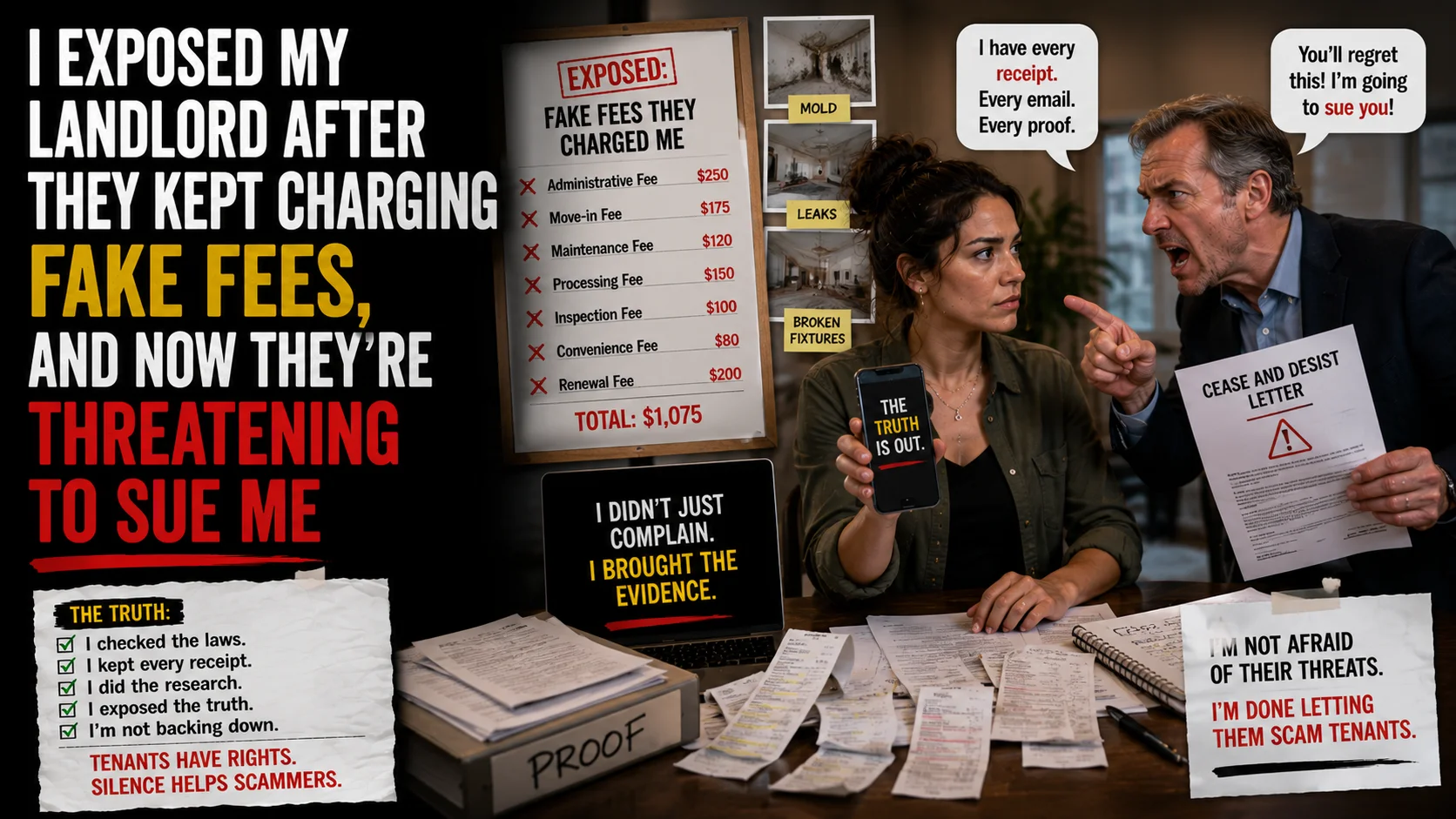
I had been living in the same apartment complex for nearly three years and had always been a reliable tenant. During my first year, my monthly rent matched the terms of my lease exactly. However, over time, unexplained charges such as “Administrative Charge,” “Building Processing Fee,” and “Maintenance Adjustment” began appearing on my statements. Although each fee was relatively small, they eventually added up to hundreds of dollars each year. When I asked the property office for an explanation, I received vague and inconsistent answers, which made me decide to review my lease and compare it with my monthly invoices.
After carefully reading my lease, I realized that none of the mysterious fees were mentioned in the agreement. Instead of making accusations, I began documenting everything, including invoices, receipts, emails, and payment records. I also discovered that different employees gave completely different explanations for the same charges. When I spoke with several neighbors, I learned they had been receiving similar unexplained fees under different names, even though their leases also contained no language authorizing those charges. It became clear that the issue affected multiple tenants, not just me.
To get a clear answer, I sent management a polite email asking them to identify the specific section of the lease that authorized the additional charges. Rather than answering my question, they responded with a warning letter accusing me of making false accusations against the property. I hadn’t accused anyone of wrongdoing—I had simply requested documentation. I continued keeping detailed records and responded calmly by repeating my request for written proof instead of engaging in arguments or making public complaints.
Over the following weeks, something unexpected happened. The unexplained fees quietly disappeared from many tenants’ rent statements, and several residents even received account credits or refunds without any formal announcement. Management also changed its billing system so that every charge included a detailed explanation. An office employee later admitted that once multiple tenants started comparing paperwork and asking questions, management could no longer ignore the issue. The threats of legal action also stopped completely.
Looking back, I never wanted a confrontation or a lawsuit. All I wanted was a clear explanation of what I was being charged for. The experience taught me that keeping good records and asking reasonable questions are some of the best ways to protect yourself. Conversations can be forgotten or disputed, but contracts, invoices, and written communication provide facts that speak for themselves. By remaining calm and relying on documentation instead of emotion, I was able to help bring greater transparency for myself and my neighbors.

Hi, I’m Afzal — the person behind Story Spark. I’ve always been fascinated by real-life family and relationship dramas: the messy conflicts, the tough choices, and the question of who was really in the wrong. I started this blog in 2026 to collect and share these stories, along with my own take on each one. When I’m not writing here, I’m a stories writer.